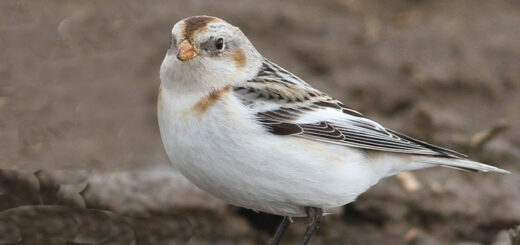
Snow Bunting
Photo by Matt Valencic
Snow Bunting’s breed in the high arctic where there are no trees, so look for them in open agricultural fields and along shorelines where they are foraging for seeds.

Snow Bunting’s breed in the high arctic where there are no trees, so look for them in open agricultural fields and along shorelines where they are foraging for seeds.
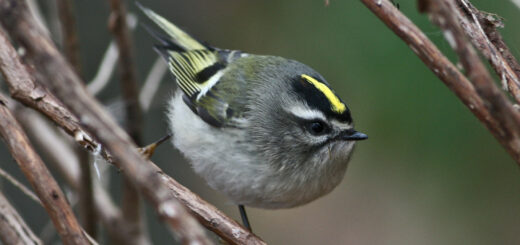
Just 4” long and weighing 0.2 oz, this bird can withstand temps down to -40F. They find insects that overwinter under bark and elsewhere during winter.
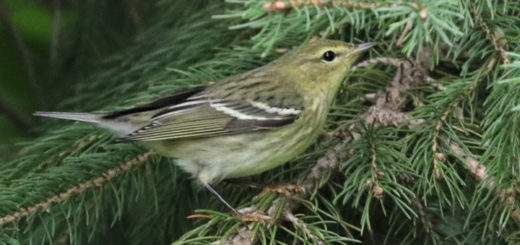
In the autumn – greenish-yellow above. Strong eye ring. Orange feet (distinguishes from Bay-breasted dark feet). Variable streaking on breast but NOT on the throat.
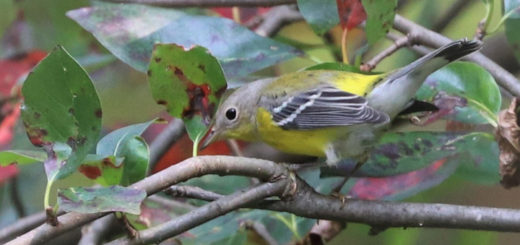
In the autumn – undertail is white with black tip. ONLY warbler with this pattern. Pale gray cap and nape. White eye ring on gray face.
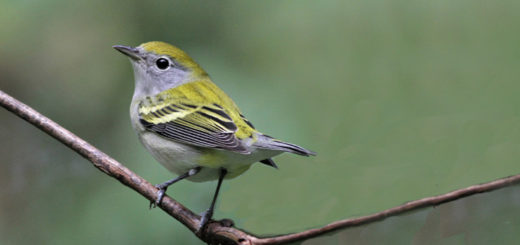
In the autumn – lime green crown and back. Yellowish wing bars. Complete, strong eye ring.
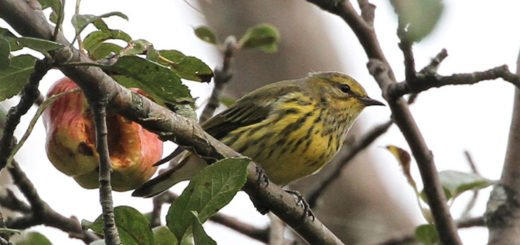
In the autumn – extensively streaked below, even throat. Yellow wash to faded yellow. Yellow green rump patch. Complete eyeline and pointy bill.
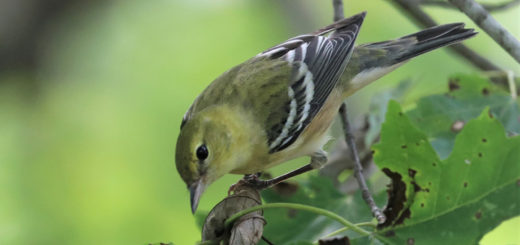
In the autumn – greenish head, two strong wing bars, buffy on the flanks and no stripes on breast.
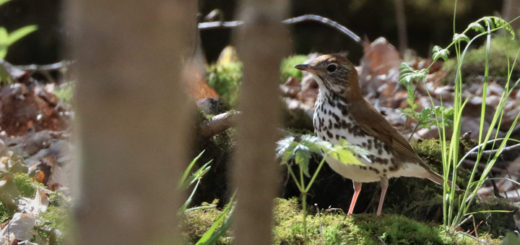
Summer birds heard but not often seen! The “E-O-Lay” of the Wood Thrush is heard early morning and late in the day in forests across NE Ohio. Their plumage blends with the leaf litter as they search for insects. When singing or flushed, they tend...
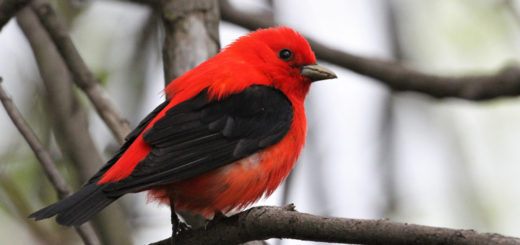
Summer birds heard but not often seen! You would think a male Scarlet Tanager would be easy to see against the green of the canopy, but not so! They stay very high in the canopy as the look for insects to eat and to feed...
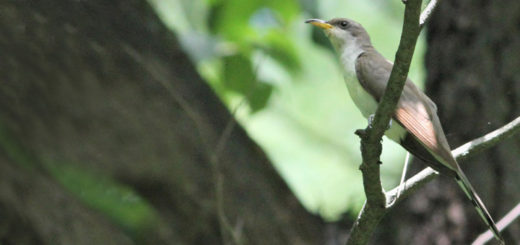
Summer birds heard but not often seen! Yellow-billed Cuckoo are caterpillar specialists and can eat over 100 tent caterpillars while ripping the nest apart. Their songs and calls can be heard at long distances but they sit still for long periods making them hard to...